Mar 2026Blog
Who Has to Be Present for the Work to Move?
The core tradeoff in AI tools is not chat quality. It is how much of the run requires your constant presence.
Here is a familiar day with modern AI tools: ask for a change, approve a step, answer a question, approve another step, clarify context, approve a third step. You are technically moving fast, but your attention is fragmented all day.
That is attended work. The system can only progress when you are present. It is interactive, responsive, and often high-confidence because you are in the loop at every turn.
Attended workflows are excellent when the problem is ambiguous, the risk is high, or requirements are still forming. They let you steer tightly and correct early. You can prevent bad branches before they become expensive.
But attended workflows also have a ceiling. Each interruption has a cost. Each checkpoint reopens context. And if a task needs two hours of uninterrupted execution, a five-minute interruption cadence can quietly destroy throughput.
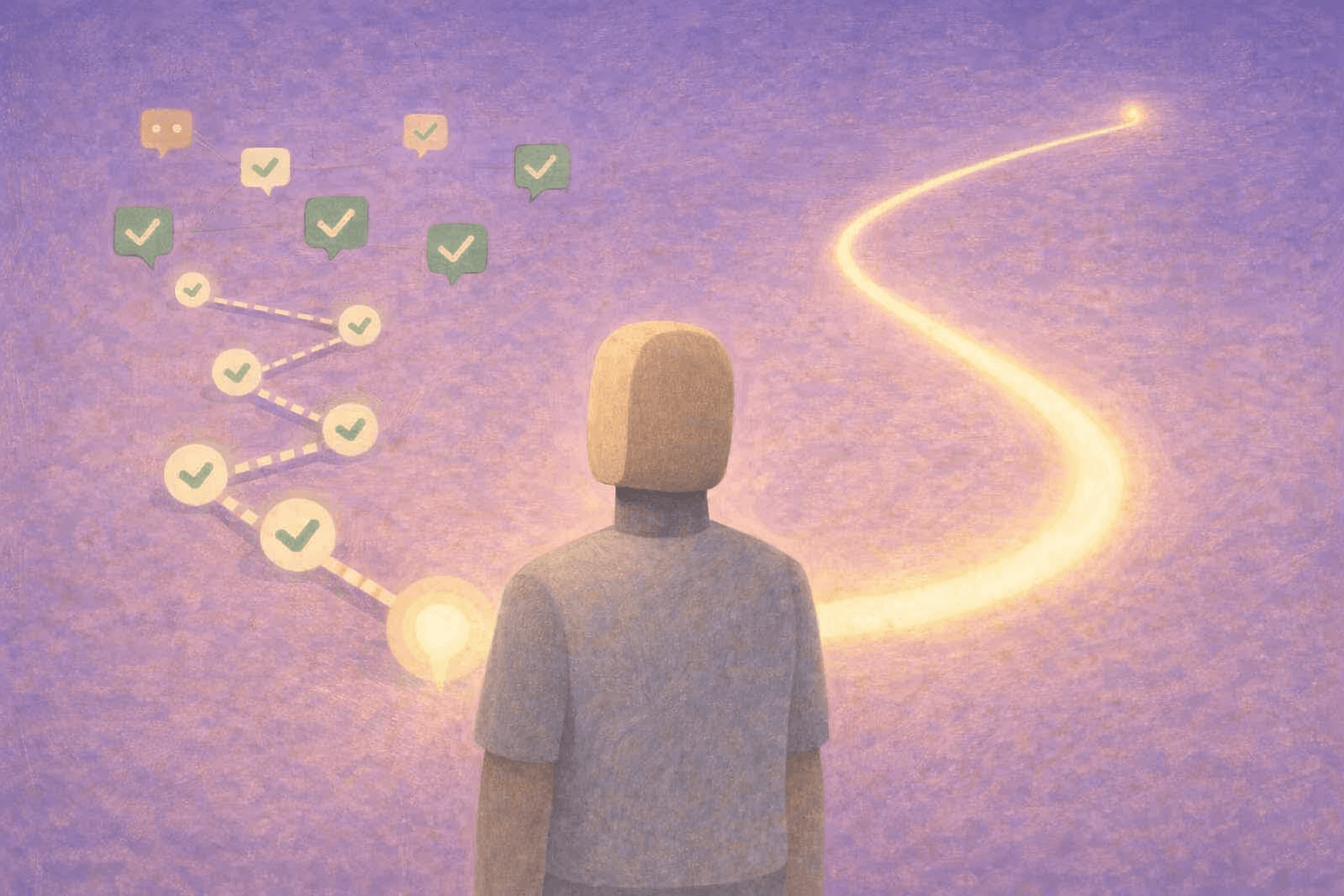
Unattended work flips the model. You align once, define constraints, and let the system run for a longer trajectory. You come back at meaningful checkpoints or at completion, instead of supervising every micro-step.
When unattended runs work well, they create leverage. Research continues while you are in meetings. Implementation moves while you review other priorities. The team gets output without paying the constant context-switch tax.
The risk is drift. A long run can go confidently in the wrong direction if scope is vague or guardrails are weak. Unattended does not remove oversight; it changes where oversight happens.
So this is the practical rule: use attended mode when the question is still being shaped; use unattended mode when the question is clear and execution is the bottleneck. Most strong teams need both, and they switch intentionally inside the same workflow.
The winning setup is not maximum autonomy or maximum control. It is choosing the right supervision density for the task in front of you. In AI operations, trajectory length is a design choice, not a personality trait of the tool.